
15 Tips To Care For Your Dog’s Health

Caring for a dog properly requires a lot of commitment. They depend on you for just about everything and it is your responsibility to keep them fit and healthy. If you have never had a dog before, this can be a bit daunting. You may be worried about doing the wrong thing and possibly harming your dog’s health.
Luckily, there is plenty of information out there. Your vet is the most reliable source of information as they are qualified to give advice about canine health. There are other professionals such as animal behavior experts, animal nutritionists and experienced dog breeders who will also have a lot of knowledge. Reputable organizations, such as the American Kennel Club also provide useful guidance.
The obvious place to start is by providing a safe and comfortable environment. Depending on your circumstances and lifestyle, this may be a kennel, bed or dog crate. Your pooch needs somewhere safe and comfortable to relax. Once that is organized, you can move onto everything else you need to do to keep them healthy.
If you are getting a little overwhelmed by all the information, it may help to have a simple list of things to do to care for your dog’s health. To get you started, we’ve compiled 15 top tips to care for your dog’s health.
Stick To A Healthy Diet
The saying ‘you are what you eat’ applies to dogs just as much as it applies to humans. Some dogs will eat just about anything and that includes things that are not good for them. Others are fussy eaters.
It is your responsibility to make sure that your dog does not poison themselves. That means keeping them away from grapes and raisins, some sugarless gums, onions and certain chocolate. All of these can be very dangerous for dogs. For this reason, it is safest to not feed your dog scraps from the table at mealtimes.
Your next challenge is to feed them a healthy diet that delivers all of the calories that they need and provides them with balanced nutrition. You get what you pay for when it comes to dog food. Cheaper commercial dog foods may seem attractive but they often contain cheap sources of protein (such as meat by-products), too many carbohydrates, fillers, grains and artificial additives. None of these are very good for your dog and will leave them feeling hungry and unsatisfied. They can also trigger allergies.
Always try to buy a food that has plenty of high-quality protein and easy to digest carbohydrates as well as micro-nutrients such as vitamins and minerals. Dogs of different ages and of different breeds can have vastly different nutrient requirements so always choose a food that is suitable for your particular dog. Too few calories can lead to weight loss and malnutrition and too many will lead to obesity. Your vet will be able to advise further.
Related Post: Dog Vitamins
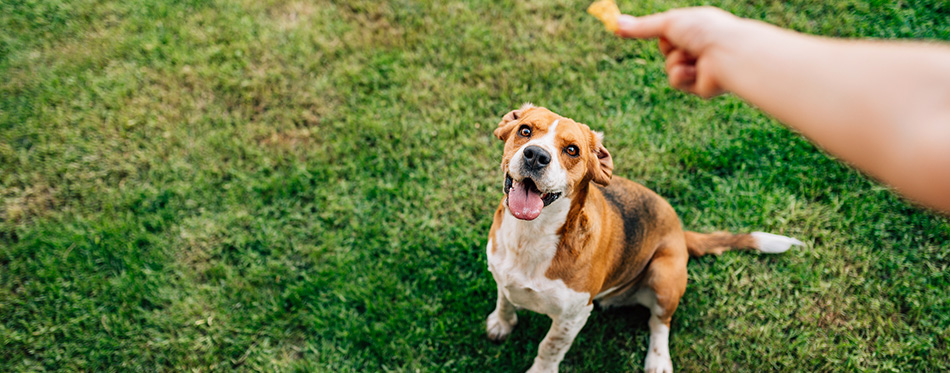
Control The Treats
Controlling the number of treats you give your pooch is not always easy. Food treats are a great training aid and a useful way of rewarding your pup when they have done something right. However, some treats are packed with calories and some are very unhealthy so always read the ingredients list. Also, you need to count these treats in your dog’s total calorie intake and reduce their food portions accordingly.
You can make your own tasty treats from healthy vegetables such as carrots but be on the lookout for choking hazards.
Related Post: Dog Treats
Exercise
There is a huge range in the amount of exercise that a dog needs. Some dogs, like the Chihuahua need hardly any. Others, like the working dog breeds, need a lot.
Exercise is vital for keeping your dog’s body healthy. It is good for the heart and lungs, for the joints and builds lean muscle. Dogs that do not get enough exercise quickly become obese. This brings a whole host of health issues including a risk of heart disease, diabetes and joint pain. Exercise is also crucial for your dog’s psychological health. They need the mental stimulation of getting out and about. A bored dog can become very destructive and may even develop behavioral issues.
Prevent Infestations
Dogs can suffer from infestations of parasites such as fleas and ticks. They cause a lot of misery for dogs as the flea bites can trigger allergies and can even become infected.
If your dog has started scratching excessively or has developed bald patches, it could be a sign of an infestation. Have a word with your vet about appropriate prevention and treatment methods.
Skin And Coat Health
A dog’s coat should be thick and glossy and they should be a joy to look at. Most dogs need grooming. Depending on the thickness and length of their coat, this could be a daily or a weekly job. You need an appropriate grooming brush or comb.
Dogs also benefit from the occasional bath but don’t overdo it. Frequent bathing could strip the coat of essential oils and can make it dry and brittle. Also, use a gentle shampoo that is designed just for dogs. For a wider selection of choices, check out our dog shampoo and puppy shampoo guides.
Use Sunscreen
Dogs can get sunburn just like we do. They can also get skin cancer. You can avoid many of the dangers associated with sunlight exposure by using an appropriate sunscreen for dogs. It is not safe to use human products because they contain substances that are poisonous for dogs.
Dog sunscreens are useful for exposed areas such as the nose and ears and the belly. They are available as sprays, balms, sticks or wipes. Don’t forget that you need to reapply them every few hours or so.
Keep Them Cool
Dogs cannot sweat and are therefore in danger of overheating. Heat stroke is a real danger for dogs and every year, many dogs die from it. You have to protect your dog by stopping them from running around when the temperatures are high. Keep them cool inside the house or in the shade.
You can get dog cooling vests and bandanas which you soak in cold water and put on to your dog. As the water evaporates, it takes heat away from your dog’s body and cools them down.
Hydration
Hydration is important for all animals and dogs need a lot of water to keep them healthy. At home, make sure that their bowl is topped up with fresh water. This is especially important during hot weather and if your dog is on a dry kibble diet. You may find dog water fountains or bowls that automatically replenish from a reservoir are preferable to a normal water bowl. The water will be fresher and more pleasant to drink.
When you are out and about a portable, fold away bowl can be useful for keeping your dog hydrated.
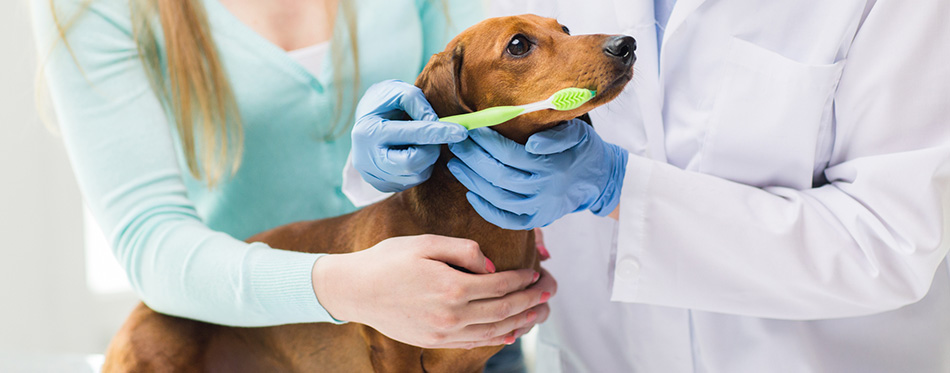
Dental Health
Poor oral hygiene is a very common problem in dogs and their owners can do a lot to help. The issue is caused by a build up of plaque on the teeth. Over time, it hardens to cause tartare and this destroys the junction between the gum and the tooth. Eventually, the gums break down and the teeth will fall out.
Feeding your dog a dry kibble may help as it will scrape the plaque off the teeth as they eat. You can also get dog chews that are a special shape and do the same job. Some dog toys are designed to do the same thing.
The best way to remove plaque is to buy a dog toothbrush and clean your dog’s teeth daily. This is best started when they are pups so they get used to it. You need to buy a special dog toothpaste that tastes like beef or bacon as human toothpaste is not suitable. Sometimes, veterinary dental treatment is required.
Socialization
A happy dog is a healthy dog and dogs are happiest if they are confident, calm and relaxed. You need to help your pooch with this. From a young age, gradually expose them to different situations, dogs and humans. They will learn how to behave around humans and around other animals.
Dog fights can get very serious and your dog could get injured or could cause another dog injury. Puppy training classes are a great method of socialization and you can meet other owners as well.
Spaying Or Neutering
Obviously, this is only an issue if you do not intend to use your dog for breeding. If you do not want your dog to have pups, there are advantages to getting them spayed or neutered. For male dogs, it will reduce the risk of testicular cancer, non-cancerous prostate disorders, perineal fistulas and it is also believed to prevent diabetes. For females, they avoid the potential health complications of pregnancy and birth. It also reduces the risks of uterine, ovarian and cervical tumors. Behavior improves in both male and female dogs that have been spayed or neutered.
Vaccinations
Vaccinations can be a controversial subject but they have saved countless dogs’ lives since they were first introduced and are a vital part of caring for your dog. Your vet will be able to advise you about which vaccines are most appropriate for your dog. This will be based on where you live, your lifestyle and your dog’s age and breed. Always follow your vet’s advice.
Training
Training is essential for keeping your dog safe and for your sanity. A badly trained dog is not pleasant to be around! Training needs to start when they are young. House training is the first step as your pup learns that pee and poops belong outside! Then you can teach them easy verbal commands such as sit, stay and come. Recall is also very important. Your dog must come back to you when you call.
Positive training methods work best and you should never use physical punishment. This will just make your dog anxious and even more badly behaved. It is also cruel. Use tasty treats as rewards but also reward your dog with your attention.
Tackling Separation Anxiety
This is the cause of misery for many dogs and causes a lot of problems for owners. It can result in physical problems such as weight loss and excessive grooming. The problem arises because dogs are very sociable animals and want to be with their owners all the time. Sadly, modern life does not allow that to happen so your dog is home alone, possibly for long periods.
You can help this situation by using stair gates to limit their access to the house and even installing dog cameras so you can see what is going on when you are not there. There are several strategies that you can use to reduce separation anxiety and make your dog feel more relaxed.
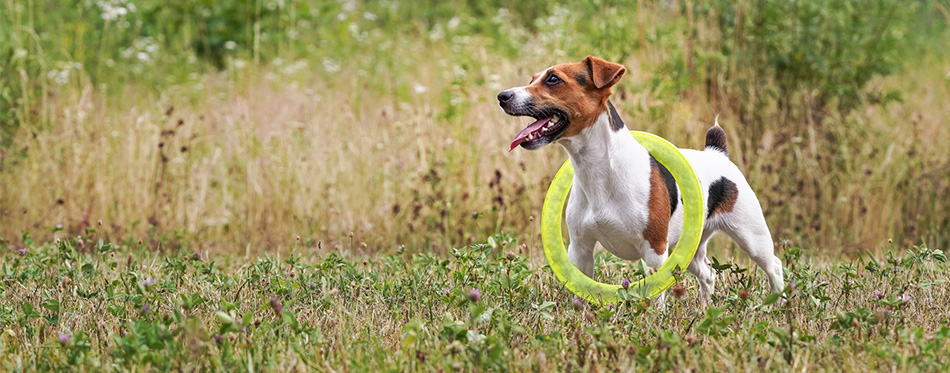
Playtime
Even older dogs are just pups at heart. They love to play with their owners and love interacting with humans. Toys are very useful for this. Toys that you throw, such as balls and frisbees, are great for games of fetch. Then there are chew toys that are practically indestructible! For more options, check out our detailed reviews of the best dog balls and best dog frisbees.
Puzzle toys are very useful for when you go out. You can hide a tasty treat inside and it can take your dog hours to get it out!
As well as these 15 tips to care for your dog, the main thing that is needed is vigilance. You know your pooch better than anyone else. Keep a close eye on how they are moving, eating, pooping and playing. Keep a close watch on their eyes, ears and skin.
If you notice any changes, have a word with your vet. It is always better to be safe than sorry.
