
12 Ways To Protect Your Dog’s Paws All Year Round

Unlike their owners who have the luxury of wearing shoes or slippers when they walk around the cold floors of the house or on the rough terrain of the park, dogs don’t have much to help them protect their paws. It is instead the responsibility of their owners to look for ways to protect their precious little paws, especially from the snowy roads in the winter and the hot pavement in the summer. If you don’t know where to begin with keeping your pet’s paws safe, here are twelve ways for you to do so.
Trim Down Long Hair
Let’s begin by talking about how you could protect your dog’s paws during the colder seasons. If you let your dog walk barefoot in the wintertime, their paws might get dry and cracked. They may even get frostbite in some more serious cases. However, before you do anything else to your dog’s feet, trim the hair around the paw area, particularly in between the toe pads.
Trim the hair in this area down to a length where it doesn’t touch the ground. This will stop snow and other potentially harmful substances from sticking to your dog’s paws and causing problems. Brush your dog’s hair regularly as well. Hair brushing on a regular basis helps get rid of dead hairs, which irritating substances can stick to. Not only that, but removing dead hairs also improves overall health and blood circulation. It helps your dog look a whole lot better as well, so there’s no reason for you to skip this step.
Take a look at our review of Paw Protection Waxes.
Keep Nails in Check
Cut your dog’s nails too, since long nails could make a dog splay out often, which could expose them to the cold even more. Good grooming also helps you apply some of the products listed below a whole lot easier. Similar to why you want to keep the fur around this area short, trimming down the nails prevents the buildup of ice and snow. Having unkempt nails could also cause uneven weight distribution, which would mess up your dog’s center of gravity. If this happens, you’ll notice your dog slipping and falling more often, especially when walking on icy patches.
Avoid Frequent Baths During the Winter
You should avoid giving your dogs frequent baths during the colder seasons. If your dog takes too many baths or if they spend too much time in one, their skin might be stripped off its essential oils – the same oils that aid in averting dried and cracked skin. However, if your dog is of a breed that requires frequent showers, then the best dog paw washer would be the one that has moisturizing qualities.
Watch Their Step
The next way you can protect your dog’s paws during the winter season is to carefully watch where they’re stepping. Certain types of deicers are actually toxic to your dog, so if you don’t know what your neighbors are using to remove the ice from driveways and sidewalks, it’s better that you steer clear of them completely. Use all-natural deicers on your side of the road to allow your dog to spend some time outside, even if just for a little bit beyond your front door.
Similarly, it would be a bad idea to let your dog drink from random puddles on the road. Always bring some clean drinking water for your dog, especially if you’re going on a long walk. Staying hydrated also helps keep your dog’s skin moisturized.
Despite your best efforts, when you and your dog go for a walk it’s practically unavoidable for them to step on something they shouldn’t get their paws on. Because of this, it’s always a good idea to wash your dog’s paws using some warm water and gentle soap after a walk. Bring a towel with you as well, so you can wipe off harmful substances, even if you’re on the go. If you do this as prescribed, you’re not only preventing deicers from irritating your dog’s paws, you’re also ensuring that your dog won’t ingest these harmful substances.
Put on Some Doggie Boots
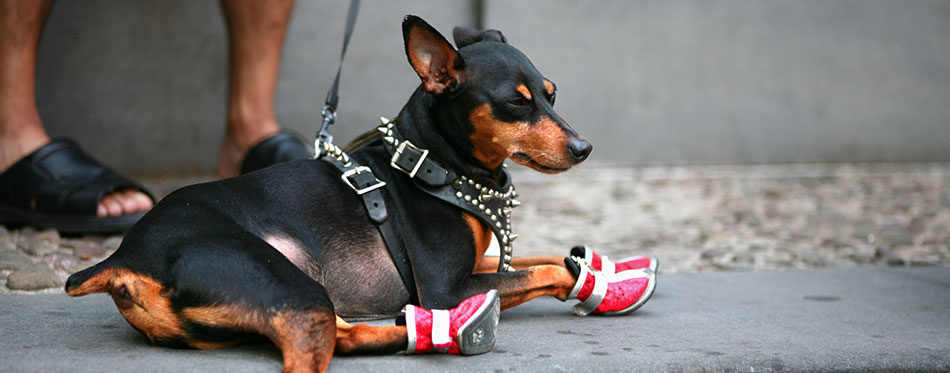
One of the more obvious ways you can protect your dog’s feet from the elements is by making them wear boots. The best dog boots and shoes are widely available in pet stores as well as through online retailers. You could even get them in a variety of designs and colors that fit different tastes. They could even be made from different materials such as leather, suede, and cotton. Just make sure that the shoes your getting are appropriate for the conditions and comfortable for your dog. Don’t just purchase a pair because you think they’ll look cute on your dog.
Since there are lots of brands that sell this type of footwear, you could easily find one you like at an extremely competitive price. If you also look out for sales, you could buy multiple pairs, which you could use for different occasions, or simply just to switch up your dog’s look throughout the week.
A lot of dog boots these days come with Velcro straps as well as reflective materials, which help keep them secured and more visible in the dark respectively. Some of them even come with rubber pads on the soles for improved traction. This added feature helps prevent accidental slips and falls, which could hurt your dog even more. Dog boots also help insulate the foot pads, which prevents dried and cracked skin. You could even make your dog wear a sweater or a coat, so they could retain their body heat better. For a wider selection of choices, check out our dog sweaters and dog coats guides.
Apply Some Balm
Not all dogs are fans of wearing shoes though. Some of them still like to go about their business in the natural way – barefoot. If your dog prefers this, you could still protect their paws by applying some balm to them. This product helps heal cracks and other forms of damage on your dog’s foot pads. Massaging these products well in and around your dog’s paws also works wonders in preventing future damage. The best part is, this tip also works in warmer climates.
If you’re having trouble looking for a dog-specific balm for your dog, then maybe you could try a balm made for human skin. You could even use Vaseline or cooking spray if those are the only suitable substitutes you have on hand at the moment. If you do use these, make sure that your dog does not step on a slick surface since these products will make them more susceptible to slipping. This balm can also be used to help sooth a dry and cracked snout, which usually goes hand in hand with damaged paws.
Now that we’ve talked about how you could protect your dog’s paws from the cold, let’s discuss how to safeguard them from extreme heat. A lot of the ways you could protect your dog’s paws from the heat are similar to how you would do so from the cold, but with a couple of little tweaks.
Schedule Your Walks Appropriately
Our first tip is to time your walks. By this we mean, you should only walk your dog when it starts to get cooler outside. You don’t want to walk your dog in the middle of the afternoon. Not only will the sun be blazing hot during that time, but the streets you and your pet are going to be stepping on will most probably also be roasting. Remember, if the weather outside is too hot for you, then it’s probably too hot for your dog also. It’s recommended that you walk your dog early in the morning or late in the afternoon so it won’t be so hot outside.
If the only time you have available to walk your dog is in the afternoon, then try your best to stay on the grass. Just make sure that you do so where people actually allow you to step on the greenery; otherwise, save the walk for some other time. It would be a good idea to bring your dog to a park with lots of trees so they could walk in the shade. Chances are, the both of you could even make a couple of new friends while you’re there.
Wear Some More Breathable Footwear
Similar to how you safeguard your dog’s feet from the cold, you could also put protective coverings on your dog’s paws to save them from the heat. When you’re buying shoes or boots for the warmer months, go for ones made from a breathable material like mesh. You could also make your dogs wear some socks for some added protection.
If you’re only looking for a temporary solution, you could try disposable booties for dogs too. Products like this one are perfect if you’re just walking on a warm day a couple of times or if you don’t go out on walks with your dog all that much.
Another alternative would be peel and stick pads, which are more tolerable for some dogs compared to boots or shoes. These pads could be made from silicone or felt, and are very easy to put on. You could even cut them down to size using a pair of scissors so they’ll fit your dog’s paws perfectly. Peel and stick pads provide a layer of protection between your dog’s paws and a hot surface. They also prevent slipping if your dog steps on a wet surface. If you put these on and remove them carefully, you could reuse them a couple of times as well.
Toughen Up the Paws
The next thing you can do to protect your dog’s paws from the heat is to toughen them up. When it begins to get a bit cooler outside, walk your dog on the hard and rough surfaces of the pavement as much as possible. This gives your dog some natural protection against hot surfaces by helping developing callouses and thicker skin. Just make sure that you wash off your dog’s feet afterwards to make sure that there’s no debris left over. These could cause irritation if left for too long.
Bathe Often in the Summer
Speaking of which, you should give your dog frequent baths in the summertime to stop the skin around the paws from drying out. This is in contrast to what you should do during the colder seasons. You shouldn’t forget though to wash your dog’s paws often. To wash your dog’s paws properly, start by pulling out any debris that’s stuck on their paws. Afterwards, wipe off the paws using a damp, room temperature cloth. Finish things off by applying a moisturizing balm to help keep your pet’s paws hydrated and nourished.
Read the Signs
You should also learn how to tell if your pet has hurt its paws. If your dog shows the following symptoms, then they may have burned the pads of their feet. You may notice them limping, or avoiding walking and other forms of physical activity that they previously enjoyed. You may also see them licking or chewing at their paws. To know if your dog has burnt its paw you could also look for visible damage, inflammation and blisters, as well as signs of discoloration – burnt paws are darker than usual. If you notice any of these, take immediate action.
Treat Burns as Soon as Possible
Now that you know how to detect if your dog has burnt its paws, you should practice the proper first aid for this scenario. The first thing you should do is remove your pet from the hot surface, if they’re on one, and bring them indoors soon as possible. Put the affected area under running water and put a cold compress on it afterwards. If your dog has a tendency to bite or chew on the injury, put a cone on them to prevent them from doing so. For more options, check out our detailed review of dog cones.
Once you’ve applied first aid, wet your dog’s paws by submerging them in some cold water for at least ten minutes. If your dog is uncomfortable with this, you may want to wrap the affected area using a damp cloth instead. Once an ample amount of time has passed, use iodine to clean any wounds present. You should also cut away any hair that could get stuck on the lesions, as this may cause infection. Pat the paws dry and be careful not to rub them. Apply some balm to help soothe the burns. Repeat as many times as necessary.
So that’s how you protect your dog’s paws from both hot and cold conditions. We’re sure you’re going to enjoy your walks a lot more if you follow these simple tips.
