
Is My Dog Dying? Common Signs & Symptoms

It is difficult to imagine living without your trusted dog by your side. It may never talk back, but you know that it is a lot more loyal and affectionate than most of your human friends. The thought of losing a pet to disease is almost unbearable, not to mention costly. Losing a dog all of a sudden because of an accident can often bring shock and disbelief before immense grief. Pet parents of elderly dogs don’t fare any better. While there’s no way we can stop death itself, we can somehow prepare ourselves to face the impending loss of a pet. One of the best ways to do this is to recognize the different signs and symptoms of an end-of-life situation in dogs. Knowing these signs will help you determine if your beloved pet is already nearing its end.
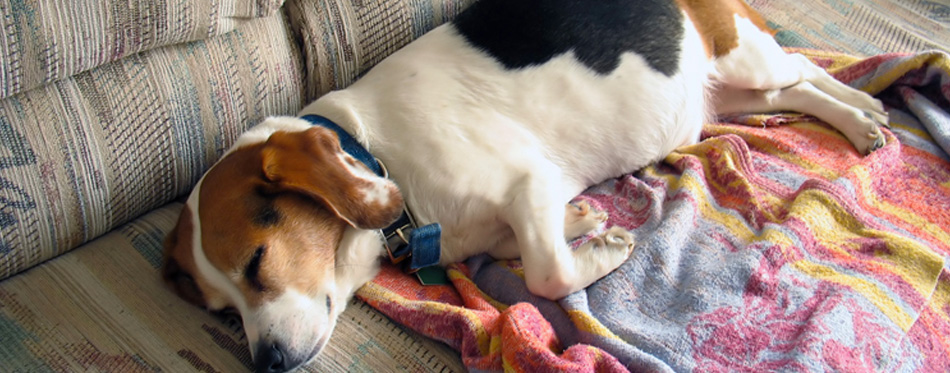
Loss of Coordinated Movements
There are two principal reasons why a dying dog may be unable to coordinate its movements. The first is related to general physical weakness. Any organism that is nearing its end will experience a reduction in overall physical energy. Since there is insufficient supply of energy or power, it will be difficult for the organism to move. There is also loss of muscle tone.
This is not the only reason why there is a lack of coordination in a dying dog. Canines in their end-of-life circumstances often have reduced brain function. Given that the brain integrates everything that occurs in the dog’s body, a dysfunction here can produce uncoordinated movements.
A dying dog will often have a combination of weakness and brain dysfunction, leading to more pronounced uncoordinated movements. This often makes the dog want to stay in one place. It knows that it will not get anywhere if it tries to get up and move.
Extreme Fatigue
Not only is weakness related to uncoordinated movements, it can also be a sign of impending death in a dog. There are many reasons why there is extreme fatigue in a dying dog. However, this is almost always related to poor circulation and worsened by prolonged inactivity.
The different organs of a dying pet are no longer working as well as they should be. One of them is the blood vessels. They may no longer be able to contract and relax as efficiently as before. The movement of blood throughout the body depends on the ability of the blood vessels to maintain tension. Since it is no longer maintained, this compromises the delivery of blood.
The organs that produce red blood cells also start to lose their function. They can no longer produce the necessary cells for carrying oxygen in the blood. This often comes in the form of very pale gums. If you press the gums for a few seconds and then release it, the pinkish color should return. If it stays white, then it’s a sure sign of poor circulation. This helps explain why a dying dog is experiencing extreme fatigue.
Seeking Comfort
Not all dying dogs will display this behavior. But for those that consider themselves to be an important part of the human family, seeking comfort is very strong. Dying dogs will try to get up and out of their beds to seek out their favorite person. It’s a natural reaction among pack dogs as well as dogs that are known to be affectionate to their human owners.
Somehow these canines know that they are not going to last very long anymore. As such, they may exhibit extreme clinginess. They will snuggle up to their pet owners a lot more often than they used to. For them, they want to spend their remaining days with their people.
This is one of the most challenging parts. Most pet parents cannot help but get too emotional about it. Unfortunately, they are not helping their dogs either. Their pets are seeking comfort from their people. But if the pet parents are an emotional wreck, this can only distress the dog.
Total Loss of Appetite
Not all dogs that lose their appetite are dying; let’s make that clear. However, you have to look at other signs and symptoms and correlate it with what you see in your dog. For instance, if your dog is not eating yet can still move from its dog bed to the backyard, then its end is still quite far. This also means you have to figure out what is causing your dog to refuse to eat. We all know that food is one of the principal motivators of dogs. If they show no interest in food, then something must be wrong.
Dogs that are near their twilight lose their appetite because of a number of reasons. Weakness is one thing. Getting up from the bed to go to its food bowl can be very tedious. And if your dog is already showing signs of uncoordinated movements, it will be almost impossible to get to its food bowl. The same is true with their need to drink. They may no longer want to drink because of the difficulty getting up.
There’s also the issue of the dog’s digestive system already shutting itself down. The sphincter in the esophagus also remains open which facilitate the backflow of gastric acids. This can irritate the esophagus and make eating unpleasant.
Another problem is the dog’s loss of its swallowing reflex. This relates to the deterioration of brain function. Since there is very little brain activity controlling the muscles that facilitate swallowing, it’s now difficult for the dog to swallow. It can cough and choke and make its life more miserable.
The problem with not eating is that it can hasten the dying process. Food supplies the nutrients that dogs need. Without it, it is quite difficult to arrest organ deterioration.

Weight Loss
It is understandable that a dog that is not eating or drinking will experience severe weight loss. Sometimes, you don’t need to bring a weighing scale to assess a dying dog’s weight loss. You can see it in its physique.
Some dogs that have cancer can develop cachexia, a condition wherein there is a loss in the dog’s protein and fat stores. The dog looks emaciated with its ribs and other bones very visible from the skin. They are your classic skin-and-bones type of dogs. Keep in mind, though, that severe malnutrition can also lead to cachexia. Problems in the liver and kidneys can also bring about extreme weight loss in dogs.
It’s for this reason that the presence of weight loss in a dying dog is best analyzed with due consideration for the other signs and symptoms.
Related Post: Dog Food for Weight Loss
Doesn’t Show Interest in the Dog’s Surroundings
Dogs have this very peculiar behavior of telling their owners that their time is near. The closer they are to their death, the more withdrawn dogs become. No one can explain how a dog behaves in such a way that it mimics the depressive states in humans.
We can only surmise that its loss of interest in its surroundings is related to its gradual loss of faculties. It can no longer move as well as before. It cannot eat or drink and may also experience vomiting and incontinence. The assumption is that a dying dog’s weakened state can have an impact on its ability to enjoy its surroundings.
Another possible reason is the dog’s declining mental state. The brain integrates and controls everything in the body. A reduction in the full function of the dog’s brain can also result in the feelings of depression or anhedonia. A dying dog will no longer show interest in its favorite food or favorite toy. It may also no longer want to go near its favorite owner, although the dog may attempt to get up.
Vomiting
It’s not easy diagnosing vomiting as a sure sign of a dying dog. It’s important to take it in light of the other manifestations.
The digestive tract in dying dogs is already shutting down. The sphincter between the stomach and esophagus does not close as tight as it should. This allows the backflow of stomach acids which can irritate the esophagus. Further down the gut, the small intestines also begin shutting down. Whatever food particles that reach this part of the digestive system will no longer undergo digestion and absorption.
The accumulation of undigested food particles can trigger the vomiting center in the dog’s brain. These food particles stimulate chemical receptors in the stomach, which sends signals to the brain. If the dog had been without food for several days, its stomach and small intestines will still produce enzymes and other substances necessary for digestion. These can also stimulate or trigger the chemical receptors.
As such, vomiting is the dying dog’s effort to remove anything that can no longer be processed by its digestive tract.
Related Post: Dog Foods for Sensitive Stomachs
Bladder and Bowel Incontinence
If vomiting is the result of the failure of the esophageal sphincter in preventing the backflow of stomach contents, the dog may have a similar issue with the anal sphincter. This is a ringlike muscle that guards the opening of the anus. This sphincter in dying dogs has already lost its full contractile capabilities. As such, it can no longer hold the dog’s stool back from passing through the rectum and anus.
The same is true with the control of the bladder sphincter. The deterioration in brain function can lead to the loss of sphincter muscle control of the urinary bladder. What this means is that the dying dog will be peeing right where it is. Since it can no longer stand to go to its potty area, it will defecate and urinate right in its dog bed.
This requires immediate care in terms of preventing secondary health problems. If a dying dog soils its sleeping area with urine and/or feces, there’s a possibility of creating pressure sores. These sores develop because moisture softens the skin of the dog, making it more vulnerable to the effects of pressure.
Labored Breathing
If you’ve been observant about your dog’s state of health, it would be very easy to determine any change in its breathing pattern. One of the most important signs of a dying dog is labored breathing. This includes breathing slower and more irregular breaths. For instance, if your dog breathes about 15 times per minute, then it may only be breathing less than 10 now. You will also need to check the pause in between breaths. A dying dog will often present with very irregular pauses in between breaths.
Labored breathing results from a loss of control coming from the brain. It is no longer able to send the appropriate nerve impulses to the muscles of the chest to regulate respirations. This sign often precedes death about several hours to a few days. Many individuals consider it as a sign of impending death.

Cool Body
By the time your dog feels a bit colder to the touch, it only has a few hours left in this world. It is natural for all warm-blooded animals to experience a lowering in body temperature as they near the end. The dog’s body starts to cool down secondary to a reduction in blood circulation. Blood is now incapable of bringing warmth to the skin and other superficial body organs. The dog’s body redirects the blood going to these organs to other more important organs like the heart and brain. It is this shift in blood that brings forth a colder skin temperature.
The blood pressure also drops as the dog nears the end of the line. The loss of brain function also means there is no more mechanism that control or regulate the blood pressure. This pressure is crucial in keeping the blood moving through the blood vessels. Without it, blood will not be able to move.
It is this combination of low blood pressure and reduced blood circulation that leads to the lowering of the dog’s body temperature a few hours before death.
Not all dogs that are on the brink of death will exhibit all of these symptoms and signs. Some may show a few while others may have additional manifestations. Once you see any of these signs, then you should already get yourself ready to say goodbye to your pet.
Source:
- Saying Goodbye to Your Dog: How to Know When It’s Time – Michelson Found Animals
