
Understanding Cat Behavior And Body Language

Our relationship with cats goes all the way back to the Ancient Egyptian era where they were treated as goddesses and held in high regard. Pharaohs hosted festivals in their honor and made amulets and statues that are now on display in several museums around the world. Cats have successfully carved a place for themselves in popular culture , appearing in famous paintings and serving as feline companions and White House pets for presidents like Abraham Lincoln and beloved authors like Mark Twain.
Several studies were carried out in order to decode feline behavior and many books were written on the subject to help people understand them better. Sometimes, it can be hard to figure out what your cat is telling you through her body language, and many feline lovers happen to share the exact same sentiment.
The following guide will assist you in navigating the sometimes confusing and often endearing world of cats and their strange mannerisms.
Eyes
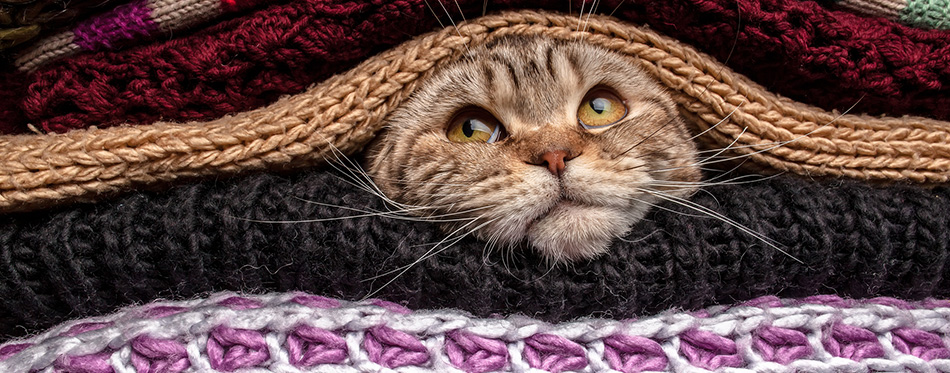
Cats use their sharp senses to explore the world around them and their eyes are no exception. Their pupils change in size depending on their surrounding environment as well as the time of day. Famous for having better night vision and great depth perception , felines are able to communicate different things just by the size of their pupils alone. Kittens and even adult cats will dilate their pupils while hunting their favorite toy or during playtime with their siblings. Dilated pupils also make an appearance whenever a cat feels threatened or scared. This automatic response to danger allows more light to flood into the eyes, making it easier for cats to assess the threat and react accordingly.
During the day, the pupils return to their normal size and often resemble two long vertical lines. Relaxed felines who are in the mood for a nap will display obvious signs of contentment and their eyes may blink slowly as a result. Calm cats also prefer making lazy eye contact with their human companions before closing their eyes and taking their daily afternoon nap.
Felines who find themselves in the middle of a fight or flight situation will have narrowed pupils accompanied by a hard, unwavering stare. Aggressive cats will maintain eye contact with their foe in preparation for an attack. Sometimes, this staring contest can last for minutes until one of them admits defeat and scurries away into the night. Sneak attacks on other felines or unsuspecting prey may result in dilated pupils and a fixed gaze that will help this sneaky cat study every move before finally lunging at her prey.
Holding a cat’s gaze is our way of showing how much we love and care about her. However, direct eye contact is interpreted differently by cats who often consider it as assertive rather than loving. Cats often gravitate toward people who hardly stare at them, and this might explain why they usually target house guests who appear nonchalant in their presence.
Belly
Some cats are incredibly protective of their bellies and consider them a restricted area that no one is allowed to touch. Those who attempt to stroke it are at risk of getting scratched or bitten by their beloved feline. Sometimes, cats send us mixed signals by rolling over and exposing this area. Those who hate belly stroking will responds in an aggressive manner. However, not all cats hate having their bellies rubbed. Felines who feel safe around their owners will have no problem exposing their bellies and owners are encouraged to give their cat a gentle head rub in response.
Defensive cats who find themselves trapped in a corner will also expose their bellies and hiss at their enemy to show them that they are more than ready to fight back.
Blinking
Exposed bellies are not the only sign of trust when it comes to cats. Slow blinking also indicates that your cat feels safe in your presence and finds you worthy of her trust. Cats use the same body language to send a similar message to other cats as well. Siblings or members of the same colony will often greet one another with relaxed eye contact including blinking to communicate affection and trust. When in danger, cats will refrain from blinking or closing their eyes, especially in an unsafe environment or situation.
Tail
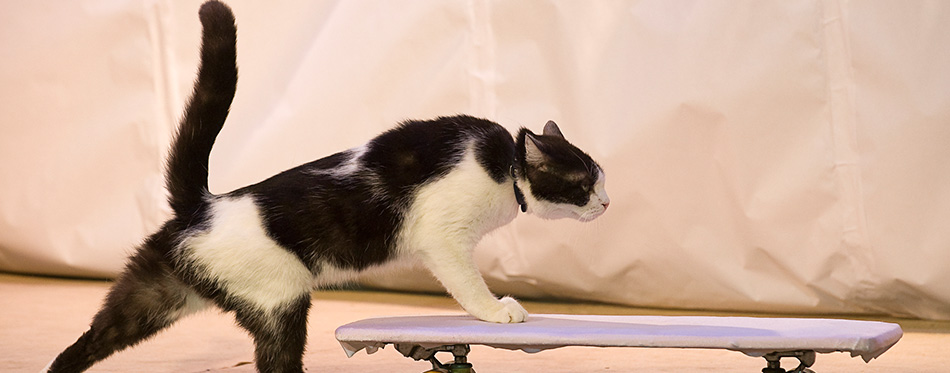
Your cat’s tail is also capable of reflecting his mood. For example, if you enter the house and your cat greets you with a raised tail, then this means that he feels confident and happy to see you. Cats who consider each other friends will curl their tails around one other, and humans who have earned a cat’s love and friendship will experience the same positive behavior.
In contrast, cats who tuck their tails between their legs are viewed as anxious and out of their comfort zone. Cats who are scared and confronted with danger will sometimes arch their backs and puff out their hair in an attempt to look bigger and more threatening. This famous Halloween pose is accompanied by a stiff tail that resembles a bottle brush.
Cats twitch their tales during bird-watching sessions where they make strange chattering noises at these winged creatures as if talking to them from behind the glass. They also move their tails in the same manner right before they pounce on their favorite toy. Stressed or irritated felines communicate their feelings by repeatedly flicking their tale.
Ears
Cats were blessed with an advanced sense of hearing with ears that resemble satellite dishes due to their ability to rotate to a 180-degree angle. This allows them to detect high pitched noises and identify prey size as well. You can learn a lot about your cat just by observing his ears. Relaxed felines have equally relaxed ears that are slightly forward. Ears pointing upwards are a sign of alertness while flattened ears are a clear sign that your cat is either, angry, scared or aggressive. This position is a surefire sign for you to back off and give your cat his much needed space. Cats follow interesting sounds with their ears and often point them towards the source of this sound due to their curious nature. Ears that move or twitch at a rapid pace can mean that your cat is anxious or unsure about something. Check out our guide on cat ear cleaner for more info.
Muzzle
Whiskers are handy tools that cats use in order to figure out the size of an opening, be it a partially open window or a hole in the wall. Their sensitive whiskers help them navigate their way through a dark room and they also double as a mood indicator. Angry or defensive cats have equally tense whiskers that are pulled back, becoming more visible as a result. Mellow cats, on the other hand, will have equally relaxed whiskers that are positioned away from their faces where they become almost invisible and hard to notice at times.
Cats use their tongues during mealtime and grooming sessions, however, licking can become a symptom of an underlying problem. This simply act may indicate that your cat is feeling uneasy about something. Nervous or uncertain cats will suddenly start licking their lips in the absence of food. Nervous cats are also in the habit of grooming or scratching themselves excessively. Some people use comfort food and stress eating to sooth themselves. Anxious cats, however, may refrain from eating due to being in a stressful environment and this stress will eventually rob them of the pleasure that comes from eating treats or playing with their favorite human.
Head over to our review of Cat Muzzle for more info.

Meowing
Never underestimate a cat who uses her voice to get what she wants. Cats do indeed alter the pitch and frequency of their meows to communicate their needs to their owners. Therefore, knowing the difference between a high pitched meow and a birdlike chirrup can help you better understand your feline friend.
Cats seem to have mastered the art of manipulation in order to secure more scrumptious treats and get more attention from their busy owners. Some of them resort to this type of vocal manipulation in order to force their owners out of bed so they can serve them breakfast. In fact, researchers have discovered that some felines alter their cries to match the frequency of a crying baby, thus using our own nurturing instincts to serve their sneaky agenda.
Decoding the different meows is necessary in order to give your cat exactly what he wants, be it dinner or attention. Senior cats will often meow due to old age and weakened senses while young cats will often sound like they are asking you a question with their meowing, especially if they are hungry or bored. A long, stretched out meow can mean that your cat is getting annoyed with you or it could mean that he is worried about something. Cats who start meowing nonstop all of a sudden may be suffering from an illness or an injury.
Purring is possibly the most soothing sound in the feline dictionary and it is described as a soft rumbling vibration that cats make when they are in a pleasant mood. Sick felines also use purring to comfort themselves during recovery.
Cats first learn to chirp or trill from their mothers who use this sound in order to get their attention so they can follow her as she slowly introduces the world to them. Happy or excited cats may resort to chirping as a way to communicate their enthusiasm.
Birds who appear right outside your window may lead your cat to chatter her teeth as she focuses all of her attention on these winged creatures. This chattering sound is believed to be your cat’s way of expressing her frustrations at not being able to reach her prey.
Fear and anger are expressed through snarling, hissing and the occasional spitting, especially in the presence of a territorial threat. Pet owners are instructed to stay away from furious cats until they calm down and go their separate ways. Intervention is only allowed if your cat is in danger.
Unspayed females use caterwauling to attract males. This loud sound is also associated with male cats and insecure felines who feel anxious whenever their owner leaves the house. Velcro cats who enjoy following their favorite human around the house will yowl to get attention, amongst other things.
It is important to note that not all cat breeds are talkative. Some breeds such as Persian and Main Coons are less vocal in comparison to shorthaired cats of Asian descent.
Posture
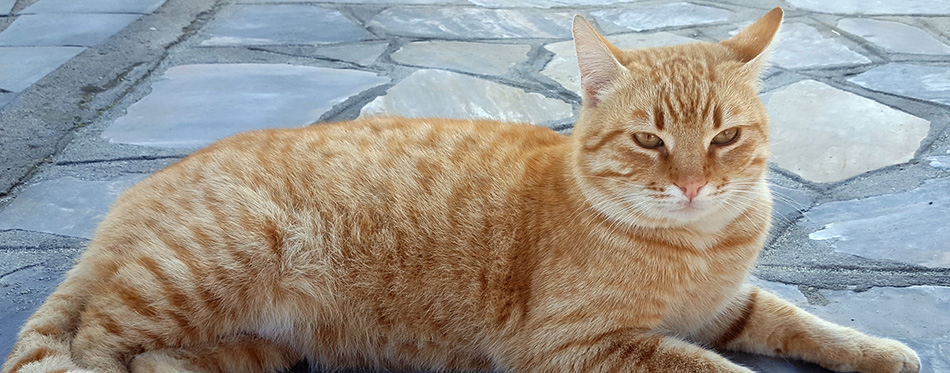
Posture also speaks volumes about what your cat is going through. Calm cats carry themselves differently and their deep, even breathing reflects their overall calm demeanor. Their claws are also hidden away since they have no use for them, especially when lounging on top of their cat tree.
Not all cats react to danger in the same manner, but their posture changes in reaction to this threat. Muscles turn into taut elastic filled with tension and claws come out to play whenever a cat finds himself face to face with his enemy. Stressed felines move in slow motion and maintain a rigid posture right before an attack. Others run and hide in order to avoid this stressful situation.
In some scenarios, scared cats will sneak out of an unsafe room by dropping low to the ground and scurrying away in silence. Nervous cats might also resort to clawing their way out of a terrible situation while breathing rapidly. Additionally, felines use their fur as an optical illusion in order to appear bigger in size. This behavior might be accompanied by an arched back and a puffy tail.
How your cat reacts to other people, animals or objects should give you an idea about his feelings towards all three. Reading his body language and listening to his different vocalizations will also help you paint a clearer picture of his personality and his wants and needs. At the end of the day, respecting your cat’s wishes and knowing when to stop petting him or carrying him before he scratches or bites you will change your relationship for the better.
Sources:
- Cat Body Language – Cats Protection
- Reading Your Cat’s Body Language – How a Cat Communicates – PetMD
